

Women make up 47% of the workforce, with more than 77 million women being employed in the U.S. in 2025. According to A Better Balance, 60% of pregnant workers report being denied reasonable workplace accommodations, including breaks, schedule changes, and time off for prenatal appointments.
Every week, more than 40 women file federal charges against employers who discriminated against them during pregnancy. Most don’t know a stronger law now protects them or that having a California pregnancy discrimination attorney changes everything.
Key Takeaways
- California has the most extensive state pregnancy accommodation laws, offering up to four months of pregnancy disability leave, plus 12 weeks of paid bonding leave, and transfer rights.
- 60% of pregnant workers report being denied reasonable workplace accommodations
-
2,132 pregnancy discrimination charges filed in the U.S. in 2024 alone. That is roughly 41 per week.
- Women are frequently fired the same day they disclose their pregnancy.
- Transportation & warehousing has the highest rate of pregnancy discrimination per pregnant worker.
Table of Contents
- Pregnancy Accommodation Laws by State Table
- Which State Has the Pregnancy Accommodation Laws?
- States Adding Pregnancy Accommodation Legislation
- Know Your Pregnancy Rights At Work Checklist
- What Are Examples of Pregnancy-Related Accommodations?
- What Federal Protections Are There for Pregnant Employees?
- Who Is Most Affected By Pregnancy Discrimination?
- What Industries See the Highest Number of Pregnancy Discrimination Cases?
- Does Having an Employment Lawyer Affect The Outcome of Your Case?
Employment Law Resource
Pregnancy Accommodation Laws by State Table
A comprehensive reference guide to state-specific protections for pregnant workers, covering accommodations, discrimination laws, and where to seek recourse.
ⓘ Federal baseline protections (PDA, PWFA, ADA, FMLA) apply in all 50 states and DC
| State | State-Specific Law | Employer Threshold | Key Protections Beyond Federal Law | Paid Leave? | Where to File |
|---|---|---|---|---|---|
| Alabama | No state law | 15+ (federal) | No state-specific accommodation protections. Relies entirely on federal PWFA and PDA. | ✕ No | EEOC |
| Alaska | Alaska Stat. § 39.20.520 | Public sector only | Public sector employers only. Right to transfer to a less strenuous or hazardous position upon request. Private sector workers rely on federal PWFA. | ✕ No | Alaska State Commission for Human Rights |
| Arizona | No state accommodation law | 15+ (federal) | The Arizona Civil Rights Act prohibits pregnancy discrimination but does not independently require reasonable accommodations. Relies on federal PWFA for accommodation rights. | ✕ No | EEOC / Arizona Civil Rights Division |
| Arkansas | No state accommodation law | Federal only | No state-level pregnancy accommodation statute for private employers. Federal nursing break laws apply. Relies on federal PWFA and PDA. | ✕ No | EEOC |
| California | FEHA + CFRA + Pregnancy Disability Leave | 5+ employees | Up to 4 months Pregnancy Disability Leave (PDL); 12 weeks CFRA bonding leave; transfer rights. Among the broadest coverage in the US. | ✓ Yes | CA Civil Rights Department (CRD) |
| Colorado | CO Anti-Discrimination Act (H.B. 16-1438) | Any employer | Good-faith interactive process required. Written notice to new and existing employees mandated. Cannot force leave if accommodation is available. Retaliation explicitly prohibited. | ✓ Yes | CO Civil Rights Division |
| Connecticut | CT Fair Employment Practices Act | 1+ employee | No minimum tenure for job-protected leave. Broad list of required accommodations including seating, light duty, and modified schedules. Cannot force leave if accommodation available. | ✓ Yes | CT Commission on Human Rights & Opportunities |
| Delaware | Delaware Discrimination in Employment Act (DDEA) | 4+ employees | Reasonable accommodations required including breaks, seating, and lactation space. Covers state and local governments. Cannot force leave if accommodation available. | ✕ No | DE Dept. of Labor, Office of Anti-Discrimination |
| District of Columbia | Protecting Pregnant Workers Fairness Act (PPWFA) | Any employer | All reasonable accommodations required. Notice in English and Spanish required. Cannot force leave if accommodation available. Covers lactation and pre-birth complications. | ✓ Yes | DC Office of Human Rights |
| Florida | No state accommodation law | 15+ (federal) | The Florida Civil Rights Act prohibits pregnancy discrimination but does not require reasonable accommodations. Relies on federal PWFA for accommodation rights. State employees receive limited paid maternity leave. | ◑ Limited | EEOC / FL Commission on Human Relations |
| Georgia | No state law (private sector) | Federal only | No private sector accommodation law. State employees receive limited paid parental leave. Private sector workers rely entirely on federal PWFA and PDA. | ◑ Limited | EEOC (private sector) |
| Hawaii | Haw. Code R. §§ 12-46-106-108 (1990) | 1+ employee | Reasonable accommodations required even for healthy pregnancies as preventative measure. Cannot sanction employee for reasonable recovery time from childbirth. Paid leave via temporary disability insurance. | ✓ Yes | Hawaii Civil Rights Commission |
| Idaho | No state accommodation law | Federal only | No state-level accommodation statute. Relies entirely on federal PWFA and PDA. No state agency to file accommodation complaints with beyond the EEOC. | ✕ No | EEOC |
| Illinois | Illinois Human Rights Act (775 ILCS 5/2-102, eff. Jan 1, 2015) | 1+ employee | Covers employees and job applicants. Accommodations include water and bathroom breaks, seating, and private lactation space. Conspicuous notice posting and employee handbook notice required. | ✕ No | Illinois Department of Human Rights |
| Indiana | No state accommodation law | Federal only | No enforceable state accommodation requirement for private employers. Relies entirely on federal PWFA and PDA. | ✕ No | EEOC |
| Iowa | No state accommodation law | Federal only | The Iowa Civil Rights Act prohibits pregnancy discrimination as sex discrimination but does not independently require reasonable accommodations. Relies on federal PWFA for accommodation rights. | ✕ No | Iowa Civil Rights Commission / EEOC |
| Kansas | No state accommodation law | Federal only | The Kansas Act Against Discrimination addresses pregnancy-related leave but does not independently require reasonable accommodations. Relies on federal PWFA for accommodation rights. | ✕ No | Kansas Human Rights Commission / EEOC |
| Kentucky | Kentucky Pregnant Workers Act (2019 S.B. 18) | 15+ employees | Lactation accommodation explicitly required. Written notice to all employees and conspicuous workplace posting required. Cannot force leave if accommodation available. | ✕ No | Kentucky Commission on Human Rights |
| Louisiana | Louisiana Revised Statute § 23:342 (eff. Aug 1, 2021) | 25+ employees | Reasonable accommodations required including seating, modified schedules, light duty, and lactation space. Written notice and conspicuous posting required. Cannot force leave if accommodation available. | ✕ No | Louisiana Commission on Human Rights |
| Maine | Maine Human Rights Act (2019 L.D. 666) | Any employer | All employers must accommodate. Covers lactation. Includes more frequent breaks, modified schedules and equipment, light duty, and lactation provisions. Paid family leave available. | ✓ Yes | Maine Human Rights Commission |
| Maryland | MD Fair Employment Practices Act (Md. Code Ann. State Gov’t § 20-609) | 15+ employees | Reasonable accommodations for pregnancy-related disabilities. Good-faith interactive process required. Health insurance must be maintained during pregnancy-related leave. | ✕ No | MD Commission on Civil Rights |
| Massachusetts | MA Fair Employment Practices Law (Ch. 151B, eff. Apr 1, 2018) | 6+ employees | Good-faith interactive process required. Doctor notes not required for breaks, seating, lifting limits, or lactation space. Separate leave rights beyond FMLA. Written notice to all employees required. | ✓ Yes | MA Commission Against Discrimination |
| Michigan | No state accommodation law | Federal only | The Elliott-Larsen Civil Rights Act prohibits pregnancy discrimination but does not require reasonable accommodations. Relies on federal PWFA for accommodation rights. | ✕ No | EEOC / MI Dept. of Civil Rights |
| Minnesota | MN Human Rights Act (Minn. Stat. § 181.939) | 21+ employees | Breaks, seating, and lifting limits (under 20 lbs) do not require a doctor’s note and cannot be claimed as undue hardship. All employers must provide lactation space regardless of size. Paid leave available. | ✓ Yes | MN Dept. of Human Rights |
| Mississippi | No state law | Federal only | No dedicated state law for private employers. Multiple legislative attempts have failed. Federal PWFA and PDA are the only protections available. | ✕ No | EEOC |
| Missouri | No state accommodation law | Federal only | The Missouri Human Rights Act prohibits pregnancy discrimination as sex discrimination but does not independently require accommodations. Relies on federal PWFA for accommodation rights. | ✕ No | MO Commission on Human Rights / EEOC |
| Montana | No state accommodation law | Federal only | Montana Code § 49-2-310 prohibits pregnancy-based termination and forced leave but does not independently require reasonable accommodations. Relies on federal PWFA for accommodation rights. | ✕ No | MT Human Rights Bureau / EEOC |
| Nebraska | Nebraska Fair Employment Practice Act (Neb. Rev. Stat. § 48-1107.02) | 15+ employees | Reasonable accommodations required including seating, breaks, light duty, and lactation space. Cannot require leave if another accommodation is available. | ✕ No | Nebraska Equal Opportunity Commission |
| Nevada | Nevada Pregnant Workers’ Fairness Act (SB 253, eff. Oct 1, 2017) | 15+ employees | Cannot force acceptance of an unwanted accommodation or force leave if accommodation available. Good-faith interactive process required. Covers applicants as well as employees. | ✕ No | Nevada Equal Rights Commission |
| New Hampshire | No state accommodation law | Federal only | RSA 354-A:7 prohibits pregnancy discrimination as sex discrimination but does not independently require reasonable accommodations. Relies on federal PWFA for accommodation rights. | ✕ No | NH Commission for Human Rights / EEOC |
| New Jersey | NJ Law Against Discrimination (NJLAD) | Any employer | Accommodations must follow healthcare provider recommendations. Private lactation space explicitly required. Strong anti-retaliation provisions. Paid leave available. | ✓ Yes | NJ Division on Civil Rights |
| New Mexico | NM Human Rights Act + Pregnant Worker Accommodation Act | 4+ employees | Written notice to employee required within 10 days of pregnancy notification. Conspicuous workplace posting required. Reasonable accommodations required. | ✕ No | NM Human Rights Bureau |
| New York | NY Executive Law § 296 + Paid Prenatal Leave (eff. Jan 1, 2025) | 4+ employees | Breastfeeding accommodations explicitly required. Cannot force employee to remain on leave. As of Jan 1, 2025, up to 20 hours paid prenatal care leave per year, tracked separately from other leave. | ✓ Yes | NY Division of Human Rights |
| North Carolina | No private sector state law | State agencies only | Executive Order No. 82 covers state agency employees only. No state accommodation law for private sector workers. Private employees rely entirely on federal PWFA and PDA. | ✕ No | EEOC (private sector) |
| North Dakota | ND Human Rights Act (amended Aug 1, 2023) | Any employer | 2023 amendment explicitly added pregnancy to the definition of sex discrimination. Reasonable accommodations required. Covers all employer sizes. | ✕ No | ND Dept. of Labor and Human Rights |
| Ohio | No state accommodation law | Federal only | The Ohio Civil Rights Act requires equal treatment during maternity leave but does not independently require reasonable accommodations. Relies on federal PWFA for accommodation rights. | ✕ No | Ohio Civil Rights Commission / EEOC |
| Oklahoma | No state accommodation law | Federal only | No state statute. Relies entirely on federal PWFA and PDA for all protections. | ✕ No | EEOC |
| Oregon | Oregon Family Leave Act (OFLA) + BOLI Rules | 6+ employees | Nursing breaks required until child is 18 months, longer than federal law. Up to 14 weeks paid leave. Strong state enforcement through BOLI. | ✓ Yes | Oregon Bureau of Labor & Industries (BOLI) |
| Pennsylvania | No state accommodation law | Federal only | The Pennsylvania Human Relations Act prohibits pregnancy discrimination but does not independently require reasonable accommodations. Relies on federal PWFA for accommodation rights. | ✕ No | PA Human Relations Commission / EEOC |
| Rhode Island | RI Fair Employment Practices Act (§ 28-5-7.4) | 4+ employees | Written notice required within 10 days of employee’s pregnancy notification. Detailed statutory list of required accommodations. 2025 expansion added menopause-related accommodations. | ✓ Yes | RI Commission for Human Rights |
| South Carolina | SC Pregnancy Accommodations Act (2018) + Lactation Support Act (2020) | 15+ / Any (lactation) | Separate Lactation Support Act covers all employers regardless of size. Onboarding notice required for new employees. Reasonable accommodations required. | ✕ No | SC Human Affairs Commission |
| South Dakota | No state accommodation law | Federal only | No dedicated state accommodation law. SD Codified Laws address pregnancy as a temporary disability in a general sense but do not independently require accommodations. Relies on federal PWFA. | ✕ No | EEOC |
| Tennessee | Tennessee Pregnant Workers Fairness Act (SB 2520) | 15+ employees | Cannot count pregnancy absences in no-fault attendance policies. Interim accommodation must begin while employer awaits medical certification. Reasonable accommodations required. | ✕ No | TN Human Rights Commission |
| Texas | No state accommodation law | Federal only | Texas Labor Code Chapter 21 prohibits pregnancy discrimination as sex discrimination but does not independently require reasonable accommodations. Active litigation challenging federal PWFA enforcement in Texas. Relies on federal PWFA for accommodation rights. | ✕ No | Texas Workforce Commission / EEOC |
| Utah | Utah Antidiscrimination Act (§ 34A-5-106) | 15+ employees | Breastfeeding explicitly included in protected conditions. Employee handbook or conspicuous posting notice required by law. Reasonable accommodations required. | ✕ No | Utah Antidiscrimination & Labor Division |
| Vermont | Vermont Fair Employment Practices Act (21 V.S.A. § 495k) | Any employer | Comprehensive accommodation list. Written notice posting required. Paid family leave program available. All employers covered regardless of size. | ✓ Yes | VT Human Rights Commission |
| Virginia | Virginia Human Rights Act (§ 2.2-3909) | 5+ employees | Written notice to employee required within 10 days of pregnancy notification. Good-faith interactive process explicitly required. Reasonable accommodations required. | ✕ No | VA Dept. of Labor and Industry |
| Washington | WA Healthy Starts Act + WLAD | 15+ (any size Jan 2027) | Expanding to all employers January 1, 2027. Lactation break time will be paid. Some accommodations granted without requiring a doctor’s note. Paid family leave available. | ✓ Yes | WA Human Rights Commission / L&I |
| West Virginia | WV Pregnant Workers Fairness Act (§ 5-11B-2) | Any employer | Employee handbook notice required. Comprehensive accommodation requirements. Pregnancy not deemed a disability by default. All employer sizes covered. | ✕ No | WV Human Rights Commission |
| Wisconsin | No state accommodation law | Federal only | The Wisconsin Fair Employment Act prohibits pregnancy discrimination but does not independently require reasonable accommodations. Wisconsin FMLA provides 6 weeks unpaid leave for birth/adoption for employers with 50+. Relies on federal PWFA for accommodation rights. | ✕ No | WI Dept. of Workforce Development / EEOC |
| Wyoming | No state accommodation law | Federal only | The Wyoming Fair Employment Practices Act prohibits pregnancy discrimination but does not independently require reasonable accommodations. Relies on federal PWFA for accommodation rights. | ✕ No | WY Dept. of Workforce Services / EEOC |
Source: A Better Balance, “State Pregnant Workers Fairness Laws,” updated December 2025. abetterbalance.org. This table is for informational purposes only and does not constitute legal advice. Laws are subject to change. Consult a qualified employment attorney for guidance specific to your situation.
Which State Has the Best Pregnancy Accommodation Laws?
The options for pregnancy accommodations differ from state to state and depend on the size of your company. Some states only require employers to follow federal protections, while others provide several months of paid leave in addition to federal rules. According to our data, here’s how the states rank:
Top 5 States for Pregnancy Accommodations
California: Applies to employers with just one employee. It offers up to four months of pregnancy disability leave, plus 12 weeks of paid bonding leave, and transfer rights. No other state is as comprehensive.
District of Columbia: All employers must provide healthcare-recommended accommodations, paid leave, and notify employees of their rights within 10 days.
New Jersey: Covers all employers, requires paid leave, and mandates lactation space based on healthcare provider recommendations.
Colorado: Applies to all employers, provides paid leave, requires written notice to all employees, and has strong protections against retaliation.
Oregon: Offers paid leave for up to 14 weeks and protects nursing breaks until the child is 18 months old. It has solid enforcement through the Bureau of Labor and Industries.
Lowest Five States for Pregnancy Accommodations
Mississippi: Lacks state laws for private-sector workers, with failed legislative attempts. Only federal law applies. If your employer has fewer than 15 employees, you have no legal recourse outside federal law.
Alabama: No state-specific protections. It relies entirely on federal law and the 15-employee requirement.
Oklahoma: Has no state statute and relies only on federal law, with no serious legislative movement toward change.
Indiana: No state accommodation law or paid leave; fully depends on federal laws like PWFA and PDA.
Idaho: Lacks state-specific law and relies on federal law, with no state agency beyond the EEOC for filing claims.
States Adding Pregnancy Accommodation Legislation
Pregnancy rights in the workplace are evolving. Several states passed or expanded pregnancy accommodation laws in 2024 and 2025, changing what employers must provide. Here are the states that recently made legislative updates:
Washington State
Governor Bob Ferguson signed new legislation in May 2025, extending pregnancy accommodation protections to all employers in the state, no matter the size. This will take effect on January 1, 2027. Currently, the law only covers companies with 15 or more employees.
Under this new law, a worker at a business with two people will have the same accommodation rights as someone at a Fortune 500 company. It also mandates that lactation break time be paid at the employee’s regular rate, which goes beyond current federal requirements.
New York
As of January 1, 2025, New York became one of the first states to require paid leave for prenatal care. Employees will be entitled to up to 20 hours of paid leave per year for prenatal appointments, tracked separately from existing sick time and paid family leave.
Rhode Island
In June 2025, Rhode Island expanded its accommodation law to require employers to reasonably accommodate conditions related to menopause. This broadens workplace protections around reproductive health. Rhode Island is the first state in the U.S. to require employers to accommodate menopausal conditions.
Not every state is making these changes. Alabama, Mississippi, Oklahoma, Indiana, and Idaho have not made any updates and depend entirely on federal law for pregnancy protections. If you work for a company with fewer than 15 employees in these states, your accommodation requests may not be legally protected.
Know Your Pregnancy Rights At Work Checklist
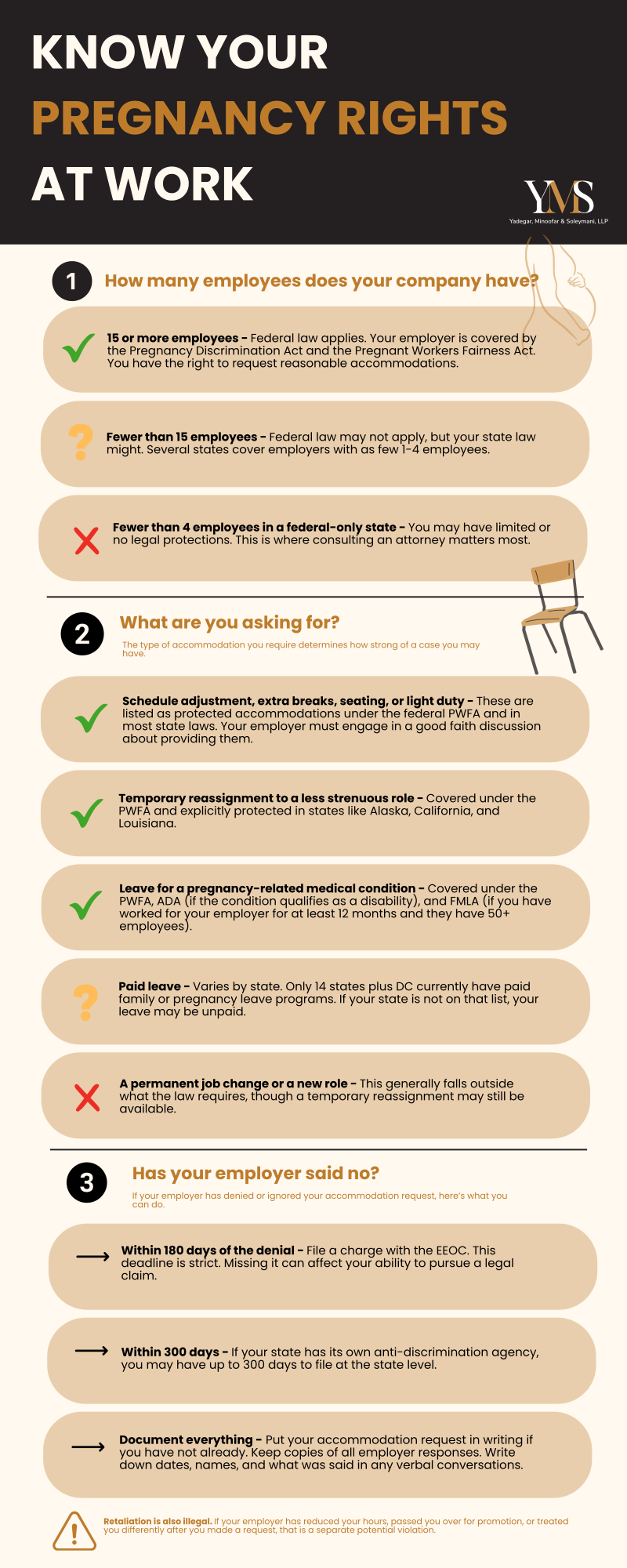
What Are Examples of Pregnancy-Related Accommodations?
- Additional Breaks: More time to rest, use the restroom, eat, or stay hydrated during the day.
- Modified Work Schedules: Changing start or end times to accommodate medical appointments or morning sickness.
- Temporary Light-Duty Work: Reassigning physically demanding tasks or reducing lifting requirements.
- Remote Work: Allowing employees to work from home if their medical condition makes commuting difficult.
- Seating Modifications: Providing a chair or stool for employees who usually stand for long stretches.
- Flexible Leave: Time off for pregnancy-related medical needs, even if the employer does not typically offer such leave.
- Temporary Job Reassignment: Moving employees to a role or location with less physical strain.
If an employer refuses to consider a reasonable adjustment, it may violate the PWFA.
What Federal Protections Are There for Pregnant Employees?
Federal laws provide a basic level of protection for pregnant workers, ensuring they are not discriminated against or denied reasonable accommodations. Key laws include:
Pregnancy Discrimination Act (PDA)
- Bans discrimination based on pregnancy, childbirth, or related conditions.
- Protects against discrimination due to pregnancy, childbirth, or related medical conditions.
- Requires pregnant workers to be treated equally to those with similar work abilities or limitations.
Pregnant Workers Fairness Act (PWFA)
- Requires reasonable accommodations for pregnant workers.
- Protects against discrimination based on pregnancy, childbirth, or related medical conditions.
- Requires equal treatment for pregnant workers compared to those with similar work abilities or limitations.
Americans with Disabilities Act (ADA)
- Covers pregnancy-related disabilities and requires accommodations.
- Prohibits discrimination against applicants or employees with any disability, including pregnancy-related disabilities (e.g., gestational diabetes).
- Requires reasonable accommodations for pregnancy-related impairments that qualify as disabilities.
- Mandates confidentiality regarding all medical records, including pregnancy-related information.
Family and Medical Leave Act (FMLA)
- Provides unpaid, job-protected leave for pregnancy-related medical needs.
- Grants eligible employees unpaid, job-protected leave for qualifying medical and family reasons, including pregnancy-related conditions.
Let’s Talk About Pregnancy Discrimination
Pregnancy Discrimination Is on the Rise in the United States
Pregnancy discrimination charges have been increasing for decades. The National Partnership for Women and Families reported a 71% rise in charges from 1992 to 2011, indicating that this trend has been ongoing. In the last decade, the volume of charges under Title VII has grown by another 20%.
In FY 2024, over 4,300 pregnancy discrimination charges were filed when combining Title VII and the new Pregnant Workers Fairness Act, averaging around 83 per week. An estimated 250,000 women are denied pregnancy-related workplace accommodations each year. However, it is estimated is conservative because about 36% of women who need accommodations never request them.
Despite the large number of charges, 74% result in no monetary benefit or required changes in the workplace. While there is a system in place to handle pregnancy discrimination, only about one in four workers see a benefit after filing.
Who Is Most Affected By Pregnancy Discrimination?
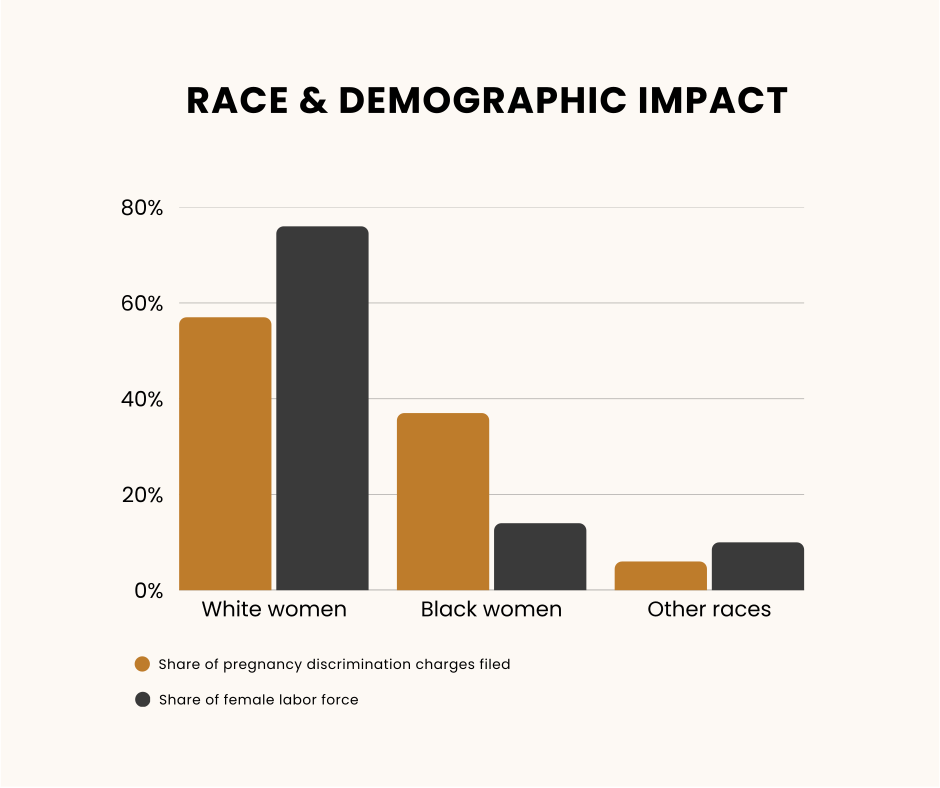
- Black women file charges at 2.6 times their share of the female labor force (37% of charges, 14% of workforce).
- The benefit rate for Black women is 23%, compared to 25% for white women.
- 36% of working mothers of very young children in low-wage jobs are women of color.
According to the UMass Center for Employment Equity, Black and Latina women are often found in low-wage, physically demanding jobs (such as home health aides, warehouse workers, and food service) where pregnancy accommodations are frequently denied. Research shows that employers are more likely to question job commitment and performance only after a woman of color reveals her pregnancy. This pattern appears in 75% of the cases reviewed.
Low-wage employees
Healthcare aides, warehouse workers, restaurant staff, and retail workers represent a large share of pregnancy discrimination charges because their jobs are physically demanding, making accommodations both necessary and likely to be denied. They often have the least flexibility, fewest paid leave options, and the least power to advocate for themselves.
Latinas and immigrant women
The National Partnership identifies Latinas and immigrant women as being at higher risk, due to their concentration in low-wage, physically demanding service sector jobs and additional barriers to reporting, such as language access, immigration status concerns, and a lack of familiarity with legal protections.
What Industries See the Highest Number of Pregnancy Discrimination Cases?
This data comes from two perspectives: total charges and discrimination rates per pregnant worker.
According to UMass CEE researchers, healthcare and social assistance generates the most pregnancy discrimination charges of any industry. This is nearly double the next highest sector. This seems surprising since healthcare employs many women, but it reflects the physical demands of the work. Nursing assistants and home health aides often need accommodations for lifting restrictions, break times, and schedule changes.
Retail trade and accommodation and food service rank second and third for charge volume, driven by similar factors: long standing periods, inflexible schedules, and physically demanding work, often with low pay and little power to challenge management.
When we look at rates per pregnant worker, transportation and warehousing have the highest discrimination rate of any industry. This means that they generate more charges relative to the number of pregnant workers employed.
Does Having an Employment Lawyer Affect The Outcome of Your Case?
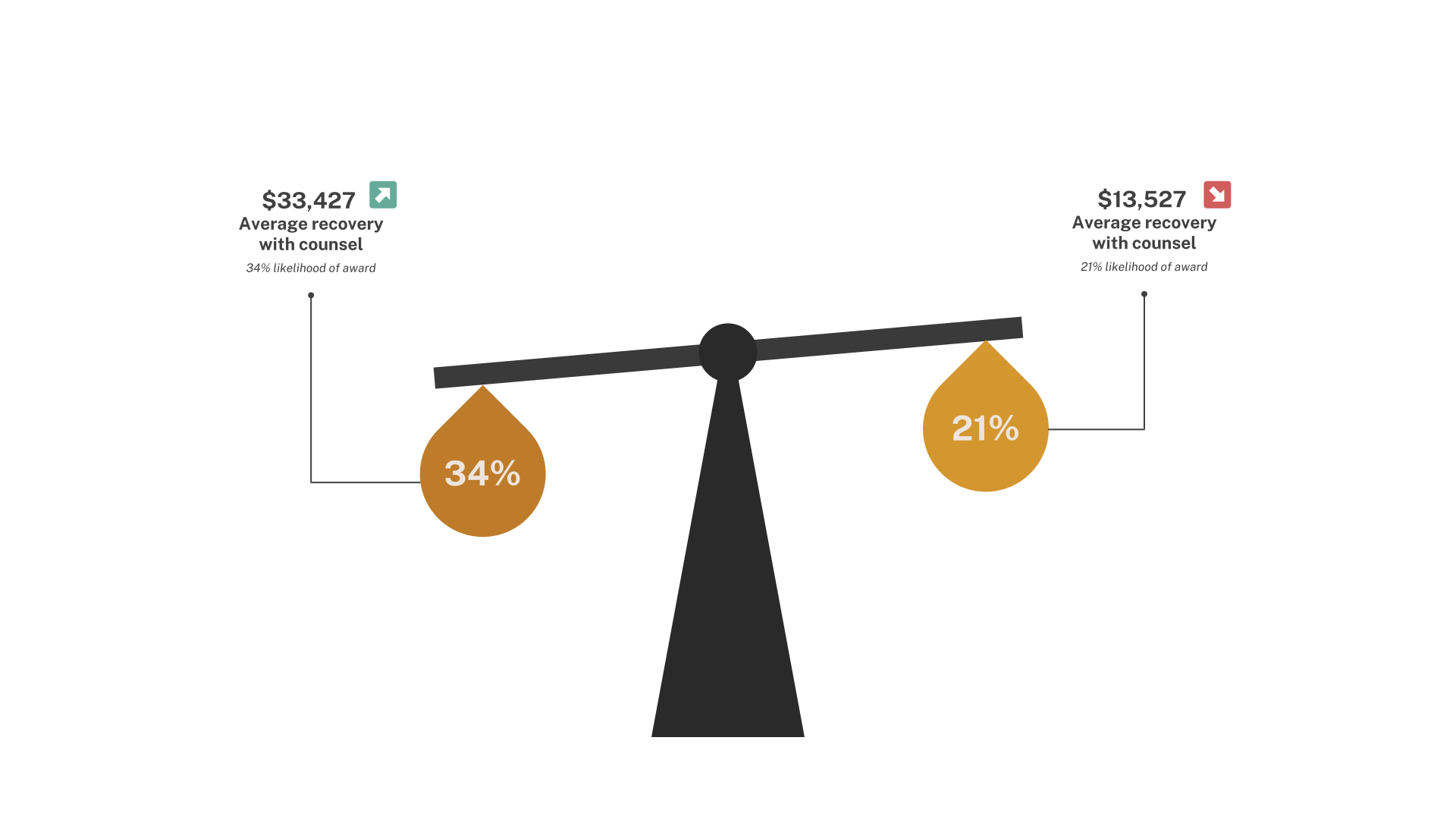
The EEOC process is available without a lawyer, but the data suggests otherwise. Records show that claimants with legal representation at filing receive significantly more, on average, than those without an attorney.
With only about one in four charges leading to any benefit, how your case is presented, documented, and built is critical, especially now with the new PWFA creating additional filing requirements.
EEOC charge records include a field that shows whether the person making the charge had an employment lawyer when they filed. UMass CEE researchers looked at this field across 26,650 pregnancy discrimination charges from 2012 to 2016. Here’s what they found:
- Claimants with legal representation at filing recovered an average of $33,427.
- Claimants without legal representation at filing recovered an average of $13,527.
- This represents a 147% difference in average monetary recovery.
- Eighty-three percent of represented claimants reported job loss, compared to seventy-two percent without counsel. This suggests that attorneys are better at identifying and explaining the full impact of the harm.
- Thirty-eight percent of represented claimants included retaliation allegations, while only twenty percent without counsel did. Again, this suggests more thorough case preparation.
Methodology
The statistics and state law data on this page come from four main sources: the U.S. Equal Employment Opportunity Commission’s published charge statistics tables; the UMass Center for Employment Equity (McCann and Tomaskovic-Devey, 2021), which studied 26,650 pregnancy discrimination charges filed between 2012 and 2016; the National Partnership for Women and Families, which has tracked pregnancy discrimination trends for several decades; and A Better Balance, which updated its state law tracker last in December 2025.
When industry rankings are mentioned, these reflect patterns seen in the UMass dataset and are not published as exact numbers by the EEOC. All charge statistics refer only to filings with the EEOC and do not include state agency filings or private litigation recoveries.
All data is provided for informational purposes only. Laws and statistics may change. This page does not offer legal advice. For guidance specific to your situation, contact our California-based law firm, Yadegear, Minoofar, & Soleymani LLP to speak with an experienced employment attorney.